Friday, November 10, 2006

Radio Roundabout...the town of two towers


I know this is off-topic, but I hope you'll fogive me.


So there I am, driving along the Randweg, a road on the southern side of the my home town, Huizen, in the Netherlands.

I came up to a roundabout that has been recently renovated and what did I see? A fifth-size replica of the world's first rotatable shortwave transmitting tower....slap bang in the middle of a new roundabout. Went back home to get the camera...just couldn't believe it. It was made of wood and stood on a site about 300 metres from the roundabout between 1937 until 22nd September 1958 when it was blown-up. Seems it took four attempts to knock the 63 metre high masts over. A new, more powerful site in Lopik, near Utrecht took over the transmissions of what was, by then, Radio Nederland Wereldomroep. The scale-model is just over 12 metres high.

As I was filming this new monument, I got mixed reactions from passers by. Some seem to be dead against it, probably because they hadn't a clue what it was. Some older folk, born and bred in this fishing village, were kinda proud of Huizen's link with the past. One kindly old gent offered to show me a set of old photos he'd kept. Another lady remember playing in the masts in 1958 when the towers were awaiting demolition. She also recalled how the turntable used to make a strange squeal like wheels on a railway engine as it spun round late in the afternoons and at night. The antenna strung between the masts was directional. By rotating it, the signal could be beamed in different directions, mainly to Asia, Africa and North America. The antenna, I believe, was actually tuned to a single frequency in the early days, 9590 kHz in the 31 metre band.
More pictures on my Flickr pages.  Posted by Picasa

Wednesday, November 01, 2006

Tape Recorder Collection


Tape Recorder Collection
Originally uploaded by Jonathan Marks.

Just taken a tour of a fascinating museum located in the gardens behind St Peter's Basilica. Its a collection of equipment used by reporters and broadcasters at Vatican Radio and also houses some standby medium and shortwave transmitters. Nice to see the old UHER sitting there. My first machine.

Wednesday, October 18, 2006

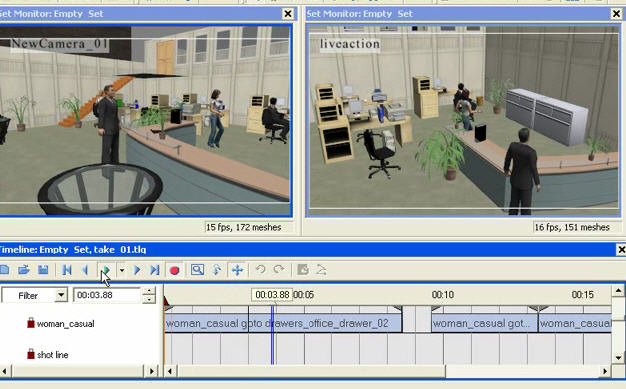
SIMS for TV creatives

Imagine the SIMS program, but then adapted in a way to use the character animations to preplan and produce TV drama or documentaries. No broadcaster will pay for rehearsal time any more, so you must arrive at a scene with a storyboard and a camera shot list already in your mind before the camera's role. I first saw Antics version 2 at IBC 2005. After a period of silence, the fruit of their work is now on sale for under 1000 Euros and, judging from the paces I have been putting it through, it is quite simply brilliant. Download a trial copy and try it for yourself. You need to devote some concentrate time to learning how to play with it, but it is a gentle learning curve. The great thing is being able to save the final scenes that you've planned as a DVD, so you can show the client just what you have in mind before any production starts. Better by miles than any paper storyboard and a great way to practice the shots. I particularly like the fact you can record dialogue and have the animation speak it for you. I am sure some people will use this program to make shows in their own right. In short, good news for the creative world - obviously a huge amount of love and care went into this. By the way, I have no commercial connection with these guys. I just believe good news should be celebrated.

Monday, October 16, 2006

More Background to what I am doing

This post is to tell you that the people behind this blog have come up with a new -free- Critical Distance Newsletter , the October 2006 Edition 9. It deals with news about this blog, but other broadcast related material as well. You can subscribe, if you like, by signing up at the Critical Distance switchboard. Unsubscribing is also easy, so don't feel locked in. Likewise, we do not use the mailing list for anything else than sending the newsletter. No phones will ring, no salesmen will call. It is in PDF format.

Tuesday, October 10, 2006

Podcasters Microphone


UK distributor Source Distribution has announced the availability of the new Røde Podcaster – which claims to be the world’s first broadcast quality USB microphone.

Based on Røde’s acclaimed Broadcaster microphone, like the NT2, the Podcaster delivers "studio-grade results through a tight cardioid response that seamlessly connects directly to PC or Mac with a single USB cable, avoiding the added cost and complexity of a separate computer audio interface".

Ideal for online broadcasters, the mic also provides a convenient solution for anyone who records audio directly to their computer, including journalists, voice-over artists, musicians, students and multi-media professionals.

The Podcaster is powered entirely from the USB bus, and uses high-grade A-D converters for optimum quality. It comes complete with an onboard high-output headphone amp for direct monitoring purposes, along with a dedicated volume control and a 3.5mm minijack headphone output. A green status LED indicates that the mic is active and ready for recording.

The microphone comes complete with a microphone stand mount and 5 metres of USB cable. Optional accessories available shortly include a suspension mount and an anglepoise table mounting arm.

To further enhance the Podcaster’s features, Røde has also developed optional downloadable software that allows the user to control the Podcaster’s recording level, to monitor levels via an LED level meter, and to mute the microphone when playing back recordings. This software is available from www.rodepodcaster.com - a dedicated site that also provides podcast hosting as well as offering a wealth of podcasting information and tips.

Oh, and the price? UK 149 pounds including UK VAT.

Monday, October 09, 2006


started an experimental thread on the Philips blog about the future of radio.

Your're invited to play along for the next couple of weeks.
 Posted by Picasa

Saturday, October 07, 2006


This portable studio costs 229 pounds in the UK. Hang it behind a microphone for studio quality in a bedroom, without having to acoustically treat the room. Posted by Picasa

Thursday, October 05, 2006

Level Your Levels with the Levelator


So what is The Levelator? It's a piece of free software (for individual use) that runs on Windows or OS X (universal binary. It adjusts the audio levels within your podcast or other audio file for variations from one speaker to the next, for example. The softwave is written in Java. It's not a compressor, normalizer or limiter although it contains all three. It's much more than those tools, and it's much simpler to use. The interface is dirt-simple: Drag-and-drop any WAV or AIFF file onto The Leveler's application window, and a few moments later you'll find a new version which just sounds better.

My experiments show it's a kind of Optimod for podcasters or broadcasters or anyone with audio in a WAV file format. Note that MP3 is not supported (yet). Worth playing around with. Let us know here what your findings are.
 Posted by Picasa

Thursday, September 21, 2006

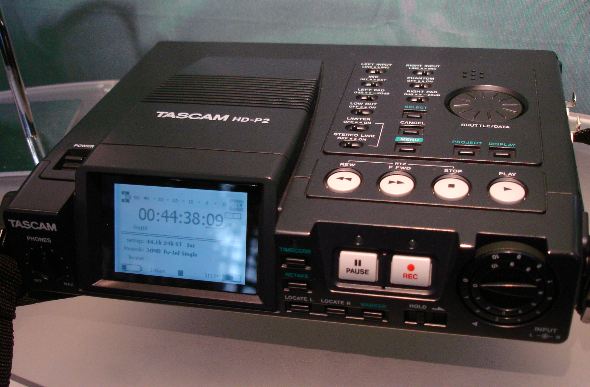
Tascam Mystery


Anyone had experience with the Tascam HD-P2, a portable Compact Flash audio recorder with timecode from video? Price should have been around US$1000, but I have yet to see it in Europe.

Specs:

Up to 192 kHz / 24-bit
Absolutely silent (no transport noise it has been claimed), latched CF slot (so it doesn't pop out accidentally)
Broadcast WAVE recording
FireWire for connecting to PC/MAC for instant file access
Data loss protection (continually re-saves data)
XLR mic inputs with phantom power and analog peak limiting
Unbalanced RCA I/O plus S/PDIF digital I/O
Built-in mic and speaker
Runs on AA batteries for 5.5 hours
Timecode input, video clock input, input chasing

Thursday, September 14, 2006

Broadcasters Without Borders


Managed to get the announcement about Broadcasters Without Borders spread quite widely at this years' IBC. Posted by Picasa

Friday, September 01, 2006

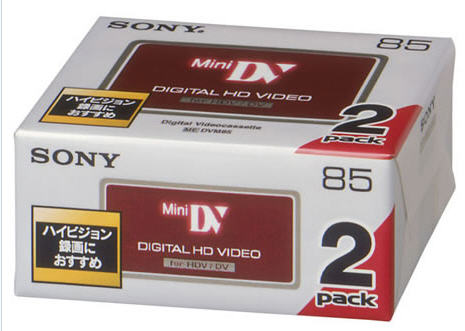
Sony LP DV tapes


Sony has launched a new type of Mini-DV tape, the Sony DVM85HD, that records for 85 minutes, that's 22 minutes longer than regular DV tapes. Must be a thinner tape, so I wonder what this has done to the drop-out ratio. Gizmodo reports that each tape will be sold in Japan for roughly $13 US dollars. The HD indicates the tapes are suitable for HD recorders. Current HD tapes in Holland cost nearer US dollars 20 for a standard length tape...may be I am being ripped off.

Sunday, August 27, 2006

Have Belkin Cracked the iPod Recorder?


Apple had crippled earlier iPod version so they could only record audio in dictation quality (8k) depite a nice microphone inside the Belkin iTalk. Now the TuneTalk Stereo claims "CD Quality" for 70 bucks. We like the fact that you can connect an external stereo microphone to the TuneTalk as well. Is this going to be of use to journalists desperate for something to replace the MiniDisc?

It seems this device will be launched at the Apple Paris show on September 12th 2006 and find its way into the retail outlets in Europe towards the end of October. Belkin has no samples before that.

Community Radio - 90% community?

Just posted an article (click link on title above) on the corporate website, which updates previous thoughts on the vital role radio is playing in West Africa. Its going wrong in Congo now because the media commission has no power to stop hate broadcasts. Those second round of elections look like turning into living hell....

This the sort of phone bridges you'll find in many local stations in Africa and Asia

  One of the biggest challenges for small stations is putting phone calls on the air, and balancing the voice in the studio with the voice on the phone. This is the way they do it Porto Novo....mike next to the speakerphone. Posted by Picasa

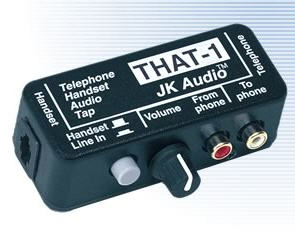
JK Audio


JK Audio is a US company making two versions of a small telephone hybrid. There are many stations in Africa who want to make use of phone calls from listeners, but make do with putting a microphone next to a speakerphone to put the voice of the caller on the air. This would seem to be a solution, although rather pricy at 150 US dollars. Know of similar, cheaper solutions?

ShareThis